11/22/2025
Today’s blog
Lynn Murphy Mark
Define “Professional”
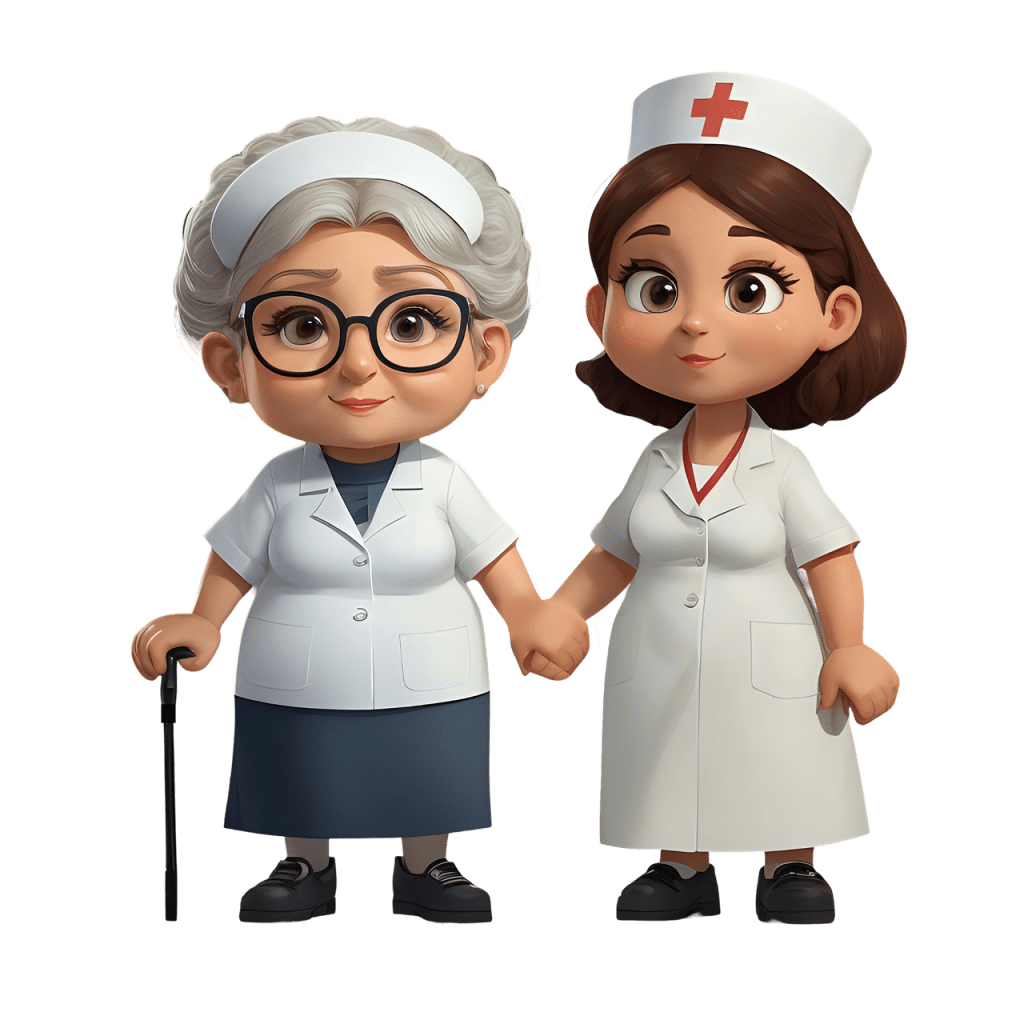
Last night I was on the phone with Katie in Baltimore. We had each just watched the latest Kathleen Madigan stand-up episode. As usual, she did not disappoint. Both of us laughed our way through repeating some especially funny one-liners we heard in the show. One in particular involved Kathleen’s mother, an elderly retired nurse. Kathleen’s father’s discharge plan after a stroke was being discussed. The family was in shock to learn that Mr. Madigan was to be discharged to home in the care of his wife – because “she’s a nurse”. Kathleen responded, “Yes she is, but in the Civil War! She had drinks with Clara Barton!”.
After we had choked with laughter, both of us being older retired nurses, Katie said something about the Department of Education’s latest missive: nursing is no longer considered a profession. “WTF?”, said I. “Why?”, was my next question. So Katie sent me a couple of articles from respected magazines like Newsweek.
To clarify a little, the Department of Education is not exactly saying that nurses are not professionals. The gist of the new ruling is that nursing education and degrees will no longer be considered “professional degrees”. This means that Bachelor’s, Master’s, and PhD’s in nursing are now subject to federal student loan caps, meaning that students will face lower borrowing limits. This goes in effect in July of 2026.
The American Association of Colleges of Nursing (AACN) has this to say: “AACN is deeply concerned by the Department of Education’s decision to move forward with a proposed definition of professional degree programs that excludes nursing and significantly limits student loan access. Should this proposal be finalized, the impact on our already-challenged nursing workforce would be devastating.”
And, “Despite broad recognition of the complexity, rigor, and necessity of post-baccalaureate nursing education, the Department’s proposal defines professional programs so narrowly that nursing, the nation’s largest healthcare profession, remains excluded…”
I don’t know about you, but I am just as happy being seen by a Nurse Practitioner as I am a visit with my MD. In my experience, the Nurse Practitioner is even more thorough than my doctor when I see her. I always leave with a plan for self-care, and perhaps a prescription to back up the plan. And, in the hospital, my first line of defense is the nurse because he or she will be informing doctors about my condition and my needs. In a complex health care situation, it is the nurses who will be setting up all the technology that constitutes forms of life-support.
The AACN has put out a report on the nursing shortage. It predicted a shortage of over 78,000 full-time RNs in 2025. The shortage continues through 2030 when it is predicted that over 63,000 full-time nurse jobs will remain empty. Today, the median age of Registered Nurses is thought to be 50. Other sources say the age is 46, So, as a workforce nurses are aging and will be retiring in coming years.
There are 4.3 million RNs working in every aspect of health care. When the pandemic hit in 2020 nurses were already experiencing a strain as, “Retirements outpacing new entrants into the field…Increased demand for health care from aging and chronic disease populations…Inadequate workforce support….Nurses are under immense stress and feel the full weight of an overburdened, poorly functioning health care system.” (American Nurses Association, “Nurses in the Workforce”).
It doesn’t make any sense at all for the government to make it more difficult for young men and women to be educated as RNs. The new proposal sets a cap of $20,500 for graduate nursing students and a lifetime total of $100,000. This comes directly from the One Beautiful Bill Act, where nursing is not currently classified as a “professional degree program”.
Last year I made what was a difficult decision for me – I did not renew my RN license. However, I do have a certificate from the Missouri Nurses’ Association thanking me for 50 years of service as an RN. In my soul, I will always be a nurse. I am proud of the differences I made in a few people’s lives. As an aging woman who will at some point need nursing intervention, I am deeply saddened by the lack of respect this Administration has for those who are the backbone of health care in America.
 Bloggerlife.blog
Leave a comment